The Best eSIM for Travel: How to Choose Your Ideal Travel eSIM
A best esim for travel is a digital sim card you install before your trip, letting you connect to local networks the moment you land. It works by scanning a QR code, instantly giving you affordable data without hunting for a physical sim or paying roaming fees. With it, you can navigate, translate, share photos, or book rides seamlessly across multiple countries on a single plan.
Why Switch to an eSIM for International Trips
Switching to an eSIM for international trips eliminates the hassle of swapping physical SIM cards or hunting for local providers upon arrival. The best eSIM for travel allows you to purchase and activate a data plan before your flight, ensuring instant connectivity the moment you land. You avoid roaming fees by choosing a regional or global eSIM that connects to local networks automatically, often at a fraction of the cost. Managing multiple plans is seamless through one app, enabling you to switch between countries without a new SIM. This convenience makes an eSIM the superior choice for staying reliably online while abroad.
Cost savings versus traditional roaming plans
Switching to an eSIM delivers dramatic cost savings versus traditional roaming plans, often cutting your mobile bill by 50–80% on a single trip. Traditional roaming charges hefty daily fees or per-megabyte rates, while eSIMs offer fixed, low-cost data packages for your destination. You only pay for what you use, with no surprise bills.
- eSIMs eliminate daily roaming add-ons that can cost $10–$15 per day, providing local-rate data for a fraction of that price.
- Traditional plans often throttle speed after a small data cap; eSIM packages give full-speed data for your entire trip at a lower total cost.
- You avoid expensive pay-per-use rates by pre-selecting a flat-rate regional or global plan that fits your exact itinerary.
Instant activation without physical SIM swaps
The defining advantage of a travel eSIM is instant activation without physical SIM swaps. You land, turn on your phone, and connect—no hunting for a local shop or fiddling with a tiny card. This eliminates the risk of losing your original SIM and the hassle of carrying a paperclip for the ejector tool. Setup happens before you leave, so your data plan kicks in the moment you arrive, saving precious airport time. Can I activate my eSIM while still in my home country? Absolutely. Most providers let you scan a QR code or install an app at home, with the plan activating automatically upon reaching your destination.
Keeping your home number active while traveling
Switching to an eSIM for travel allows you to keep your home number active by using a dual-SIM configuration. You install a local data eSIM while your primary physical SIM or eSIM remains enabled solely for voice and SMS. This prevents missed two-factor authentication codes or work calls without incurring roaming data charges. Your home line stays reachable on its original number, while all internet traffic routes through the travel eSIM. The key is disabling cellular data on your home line in your phone’s settings to avoid accidental overage fees.
Keeping your home number active with an eSIM means you maintain incoming calls and texts on your original line while a separate digital SIM handles all data abroad, eliminating the need to swap physical cards.
Key Factors When Selecting a Global eSIM
When selecting a global eSIM for travel, the primary factor is network coverage across your specific destinations, not just global claims. Prioritize eSIMs that partner with local carriers in each country to ensure stable speeds. Data allowance is critical—match it to your usage of maps, messaging, and social media. Evaluate top-up flexibility; the best plans offer seamless data additions without requiring a new eSIM. Price per gigabyte varies significantly, so compare rates for your exact trip length.
Avoid eSIMs with restrictive throttling after a small data cap; instead, choose plans offering genuine high-speed data for the entire trip.
Finally, confirm the activation process is simple and supports your device, as manual APN configurations can be cumbersome mid-journey.
Coverage maps: regional vs. worldwide data networks
When evaluating coverage maps for the best eSIM for travel, prioritize regional vs. worldwide data network architecture. A “worldwide” plan often relies on a single global roaming partner, which can be slower in certain countries. Conversely, regional maps typically show native connections across multiple partner networks within a specific continent, offering more consistent speeds. A global map promising 200+ countries often hides weaker coverage in rural zones compared to a targeted regional one. Always cross-reference provider maps with actual network types—4G LTE vs. 5G—in your destinations.
Choose a regional network map for consistent performance within a continent; choose worldwide for broad but occasionally weaker connectivity across multiple continents.

Data allowances and fair usage policies
When selecting the best eSIM for travel, scrutinize data allowances for hidden throttling. Many providers advertise “unlimited” plans but enforce strict fair usage policies, reducing speeds to 128–256 kbps after a daily threshold (e.g., 500 MB). Pay-as-you-go top-ups often have higher per-GB costs than initial bundles. Always check if unused data rolls over or expires monthly.
Q: What happens if I exceed a fair usage policy’s daily limit? Your connection remains active, but speeds drop dramatically—often to 2G levels—making video streaming or large downloads impractical. Opt for plans with transparent per-GB caps to avoid throttling surprises.
Speed tiers: 4G, 5G, and throttling thresholds
Speed tiers directly impact your travel experience. Most travel eSIMs default to reliable 4G LTE, which handles maps and messaging seamlessly. 5G is available but often limited to specific local networks or more expensive regional plans; confirm coverage before paying a premium. Throttling begins after you exceed a plan’s high-speed data cap, dropping speeds to 128 kbps–1 Mbps—enough for text but not video. Always check the full-speed data allowance and the throttled speed to avoid surprises.
Q: Will a 5G eSIM always be faster than a 4G one for travel?
A: Not necessarily. 5G coverage is patchy in many countries, and your phone may fall back to 4G in non-5G areas. For consistent performance, a 4G-only plan is often more reliable than paying extra for untested 5G.
Customer support and app usability
When selecting the best eSIM for Japan eSIM travel, responsive customer support and intuitive app usability are critical for avoiding connectivity crises abroad. An app must allow instant plan activation and real-time data monitoring without unnecessary steps, as any interface friction wastes valuable trip time. Effective support extends beyond a chatbot; the provider should offer 24/7 live chat or WhatsApp assistance that acknowledges time-zone differences. A clear, searchable FAQ within the app further reduces downtime by letting travelers troubleshoot common errors immediately. These features ensure that technical hiccups, not user confusion, are the only barrier to staying online.
- 24/7 live chat or WhatsApp support with rapid response times during local peak hours
- One-tap plan activation and balance tracking directly from the app dashboard
- Integrated, searchable FAQ that resolves top errors without leaving the interface
Top-Rated eSIM Providers for Frequent Flyers
For frequent flyers, Airalo remains a top-rated choice with its vast country-specific and regional plans, letting you install an eSIM before landing. Holafly excels with unlimited data packages, ideal for heavy streamers or remote workers on the go. Nomad eSIM offers competitive pricing and easy top-ups for multi-stop itineraries. Always check for 5G network compatibility to ensure lightning-fast connections during layovers. Meanwhile, Orange Holiday World covers multiple continents with a single plan, reducing hassles. For budget-conscious travelers, Ubigi provides reliable, low-cost data without contract ties. Each provider allows seamless switching between networks, so you can jump from Tokyo to London without fumbling for physical SIMs.
Airalo: versatile plans across 190+ destinations
Airalo stands out by offering versatile plans across 190+ destinations, letting you switch from a regional Europe pack to a single-country Japan eSIM instantly. For each destination, you can pick pure data, talk-and-text bundles, or long-term validity options, so you never overpay for unused features. Global packages cover multi-country trips without juggling multiple SIMs, while local rates stay consistently competitive. This flexibility means you can adapt your connectivity on the fly—whether hopping islands in Thailand or touring Italian cities—without hunting for physical SIMs or changing providers mid-journey.
Holafly: unlimited data packages for digital nomads
For digital nomads who need constant connectivity, Holafly stands out among the best eSIM for travel options by offering truly unlimited data packages, not throttled high-speed caps. Instead of micromanaging megabytes, you stream, video call, and hotspot your laptop without counting. These plans are destination-specific, covering entire regions or countries, and activate instantly upon arrival. The straightforward, all-you-can-use approach eliminates the stress of running out of data during a workday. For frequent flyers whose livelihood depends on reliable access, Holafly’s unlimited structure removes uncertainty, making it a top-rated choice for uninterrupted remote work abroad.
Nomad: pay-as-you-go flexibility for short trips
For travelers needing pay-as-you-go flexibility for short trips, Nomad offers a practical solution by allowing users to purchase data plans by the day or gigabyte without long-term commitments. This structure lets you activate a plan only when and where you need it, ideal for quick getaways or stopovers. Nomad’s plans are purely data-focused, eliminating voice or SMS clutter that short-trip users rarely use. A comparison of key aspects shows its focus on simplicity:
| Aspect | Nomad Pay-As-You-Go |
|---|---|
| Plan Duration | 1–30 days, no renewal required |
| Data Options | 500 MB to 10 GB per trip |
| Top-Up | Purchase new plan when needed |
| Active Period | Starts on selected date; no auto-charges |
Ubigi: strong performance in Asia and Europe
For frequent flyers, Ubigi’s strong performance in Asia and Europe makes it a standout travel eSIM. In Japan, South Korea, and major European hubs like France and Italy, you’ll get consistently fast LTE without hunting for local SIMs. Ubigi’s coverage in these regions means your maps and messages load instantly, even after a long flight.
- Speeds feel snappy in Tokyo subway stations and Parisian cafés
- Plans are easy to top up mid-trip without data running dry
- Works straight out of the plane with immediate activation
Google Fi: seamless integration for Android users
For Android users, Google Fi offers the most frictionless travel eSIM experience, as it leverages native Android features like automatic carrier switching between T-Mobile, US Cellular, and international networks. Activation takes under two minutes directly in the phone’s settings, and your existing number stays active for calls and texts abroad without app gymnastics. Fi’s seamless Android integration means billing, data usage, and Wi-Fi calling just work, mirroring your domestic setup in 200+ countries. This deep system-level advantage is what makes Fi feel less like a travel SIM and more like your actual network never left home.
Q: Does Google Fi’s seamless integration for Android users allow me to use my US number for two-factor authentication while traveling?
A: Yes, your US number remains fully operational for SMS-based 2FA verification worldwide, which is a critical advantage over most travel-only eSIMs.
Comparing Regional eSIM Options by Continent
When comparing regional eSIM options by continent for the best esim for travel, coverage density varies significantly. European regional plans typically offer seamless cross-border connectivity within the Schengen area, making multi-country road trips effortless. In Asia, regional eSIMs excel for itineraries covering Japan, South Korea, and Thailand, but may exclude more remote islands or specific local carriers in China. For the Americas, a single North America plan covers the US and Canada, while a separate Latin America eSIM is often required for Mexico and Central America. Africa and Oceania present the greatest challenge, as comprehensive regional eSIMs are rare; travelers here often need country-specific plans.
A key insight is that regional eSIMs are cost-effective for compact, well-networked continents like Europe but unreliable for sprawling or fragmented regions like Africa or the Pacific Islands.
Always verify the included countries against your exact route before purchasing.
Europe: multi-country plans and EU roaming perks
For European travel, multi-country eSIM plans are the most efficient option, as they provide unified coverage across Schengen states without needing separate regional purchases. The critical advantage is seamless EU roaming compatibility, which treats your data allowance as a single pool usable across all member countries. This eliminates the logistical hassle of swapping SIMs or managing multiple eSIM profiles when crossing borders.
- Single plan covers 30+ European nations, including the UK and Switzerland, under one data allowance
- Roaming functions identically to local connectivity, with no speed throttling between countries
- Activation on entry works across major airports’ network bands (2100 MHz/1800 MHz) for immediate connection
- Top-up options remain identical across all EU destinations, avoiding regional price variance
Asia: budget-friendly local options in Japan, Korea, and Thailand
For travelers prioritizing cost, budget-friendly local options in Japan, Korea, and Thailand offer unbeatable value. In Japan, local carriers like IIJmio provide high-speed data plans under ¥3,000 for weeks. Korea’s KT and SK Telecom prepaid eSIMs deliver 7-day packages for under $20. Thailand excels with AIS and dtac offering 15-30 day plans for less than $15, perfect for longer stays.
| Country | Local Provider | Price Range (USD) | Typical Duration |
|---|---|---|---|
| Japan | IIJmio | $15–$25 | 7–30 days |
| Korea | SK Telecom | $10–$20 | 3–7 days |
| Thailand | AIS | $8–$15 | 15–30 days |
North America: value plans for Canada, USA, and Mexico
For seamless connectivity across the three countries, North America regional eSIM value plans offer a single, affordable data pool covering Canada, the USA, and Mexico. Rather than buying separate local SIMs, a single plan activates instantly upon arrival and merges coverage across all major networks. Budget-friendly options like 5GB for 30 days or 20GB for 60 days cost significantly less than standard roaming from your home carrier. Most plans feature high-speed LTE/5G data for maps, streaming, and messaging without throttling across borders, ensuring predictable spending without surprise fees.
North America value plans unify Canada, USA, and Mexico under one eSIM, providing cheaper, hassle-free coverage than multiple local SIMs or roaming packages.
South America and Africa: niche providers with reliable connectivity
For South America and Africa, niche providers like Airalo’s regional packs and Holafly’s local plans offer reliable connectivity in patchy networks better than global giants. Brazil’s vast 4G coverage via Claro and TIM contrasts with Peru’s spotty rural access; Airalo routes data through stable backbone carriers. In Africa, MTN and Vodacom dominate urban centers, but niche eSIMs like Sim Local secure access to both, avoiding expensive roaming. South Africa’s coast-to-coast 5G remains limited to Johannesburg and Cape Town, demanding a provider that prefers MTN over smaller rivals.
- Brazil and Argentina: strong urban LTE with Airalo’s Claro link, avoiding local SIM registration hassles
- Kenya and Nigeria: MTN’s deep rural presence through Holafly’s tailored Africa pack
- South Africa: Vodacom/MTN dual-carrier access via niche providers, cheaper than major international plans
How to Install and Activate Your eSIM Before Departure
To install and activate the best eSIM for travel, first purchase a plan from a provider like Airalo or Holafly. After payment, you’ll receive a QR code or manual activation link via email. Before departure, ensure your phone is unlocked and connected to Wi-Fi. Scan the QR code in your device’s cellular settings or manually enter the activation details. The eSIM will install as a secondary line. Activate it only when you land at your destination, as this triggers the plan’s start date. Test the connection by toggling cellular data to the eSIM line. Keep your primary SIM active for calls if needed, but disable data roaming on it to avoid charges.
Checking device compatibility (iPhone, Samsung, Pixel)
Before purchasing an eSIM, confirm your device is carrier-unlocked. For iPhones, models from XR onward support eSIM, but Chinese, Hong Kong, and some Thai variants may have a physical SIM-only slot. Samsung Galaxy S20 and newer models (excluding the US-locked S21 and S23 series from certain carriers) generally work; check your IMEI on Samsung’s portal. Pixel 3a and newer (excluding some Verizon-locked Pixel 3/4 units) support eSIM. Verify your carrier’s unlock policy to avoid activation failures after installation.
Only unlocked iPhones XR+, modern Samsung Galaxy, and Pixel 3a+ devices are reliably compatible with travel eSIMs.
QR code scanning and manual APN setup
To install your eSIM, scan the QR code from your provider’s dashboard; this instantly downloads the eSIM profile. If scanning fails—or your device requires it—locate “APN settings” in your mobile network menu, then manually enter the exact APN string provided with your plan. This manual APN setup ensures data connectivity when roaming. For best results, scan the QR code over Wi-Fi before departure, then double-check that the APN fields (like “fast.t-mobile.com” or “wholesale”) match precisely. A mismatched APN breaks mobile data, while a successful QR scan triggers automatic carrier configuration—saving you from fiddling with settings mid-trip.
| Method | Key Action | Best For |
|---|---|---|
| QR Code Scanning | Camera-based profile download | One-step activation |
| Manual APN Setup | Typing APN details manually | Troubleshooting failed scans |
Dual SIM management: balancing eSIM and physical SIM
When you install your eSIM before departure, juggling it with your physical SIM is all about smart defaults. Set your eSIM for cellular data to avoid roaming fees while keeping your physical SIM active for calls and texts back home. Label each line clearly in your settings—”Home” for the physical card and “Travel Data” for the eSIM—so you never accidentally drain prepaid data. Many phones let you choose which SIM handles iMessage or WhatsApp, so route chats through your eSIM to keep your home number free. Manage dual SIM data usage by toggling “Allow Cellular Data Switching” off to prevent your phone from using the expensive physical SIM.
Balancing eSIM and physical SIM means assigning data to the eSIM, calls to the home card, and locking settings to avoid surprise charges.
Hidden Costs and Fine Print to Watch Out For
When evaluating the best esim for travel, scrutinize the fine print for data-only restrictions that block voice calls or SMS, which can incur separate, unexpected per-minute charges. Many plans advertise a “flat rate” but deprioritize speed after a small soft cap, effectively throttling your connection. Automatic top-ups are a hidden cost trap, activating with no notification when your balance runs low, often at higher per-GB prices. Look for activation fees buried in terms, or expiry policies that erase unused data after 30 days, not your return date. Finally, avoid providers that bill in a foreign currency without a fixed conversion rate, as exchange rate fluctuations can silently increase your final cost beyond the advertised price.
Top-up fees and expiration dates
Top-up fees and expiration dates can quietly drain your travel budget. Many budget eSIMs charge a sneky “service fee” each time you add data, making small top-ups surprisingly expensive. Also, check the expiry: some plans kill unused data after just 7 days, forcing you to buy more. Always pick an eSIM with rollover data and no top-up charges to avoid waste.
Q: What happens if my data expires mid-trip?
A: You’ll lose access immediately. To avoid this, buy a longer validity plan upfront or choose an eSIM that lets you top up without extra fees.
Data throttling after hitting limits

Many eSIM plans advertise generous data allowances, but after you hit that limit, speeds can plummet to frustratingly sluggish 128 kbps. This extreme speed reduction after data cap can render navigation apps useless and social feeds unloadable. Always verify the exact throttled speed, not just the “unlimited” claim. Some providers cut data entirely rather than slowing it, demanding a top-up mid-trip. For seamless travel, choose an eSIM with a clear post-cap policy—either high-speed data refills or a usable minimum throttle—so your connectivity doesn’t vanish the moment you overshoot your plan’s invisible boundary.
Restricted tethering and hotspot policies
Many budget eSIM plans for travel impose strict hotspot usage limits, either blocking tethering entirely or throttling shared data to unusable speeds after a small allowance. This hidden cost means you cannot legally share your connection with a laptop or tablet, effectively reducing your plan’s utility. Always verify the policy in the provider’s fine print before purchase, as violating these restrictions can result in immediate suspension of service without refund, leaving you without connectivity.
Eco-Friendly and Practical Benefits of Digital SIMs
For travelers, the eco-friendly benefits of digital SIMs are immediate and practical. By eliminating plastic cards and packaging, they drastically reduce physical waste from single-use SIMs. You also save time and hassle through instant activation, avoiding the search for local shops. The best eSIM for travel lets you manage plans entirely on your phone, allowing you to top up data seamlessly without swapping cards. This digital approach conserves natural resources used in production and shipping, while offering the practical advantage of keeping your existing number active. For frequent travelers, this means fewer disposable materials and a streamlined, zero-waste connectivity solution that is both convenient and environmentally cleaner.
Reducing plastic waste from physical SIM cards
Each physical SIM card, from production to disposal, contributes petroleum-based plastic waste that persists for centuries. When traveling, the cumulative impact multiplies as tourists discard local SIMs after short use. Adopting a best eSIM for travel eliminates this plastic lifecycle entirely—no manufacturing, packaging, or physical component ever enters the waste stream. Digital SIMs store credentials in device memory, rendering the physical card obsolete. This direct substitution means every traveler switching to eSIMs prevents one more tiny fragment of non-biodegradable debris from reaching landfills or oceans. The reduction is absolute and immediate per each trip.
Switching to eSIMs during travel eliminates the plastic waste generated by physical SIM card production, packaging, and disposal for every single trip.
No risk of losing or damaging a tiny chip
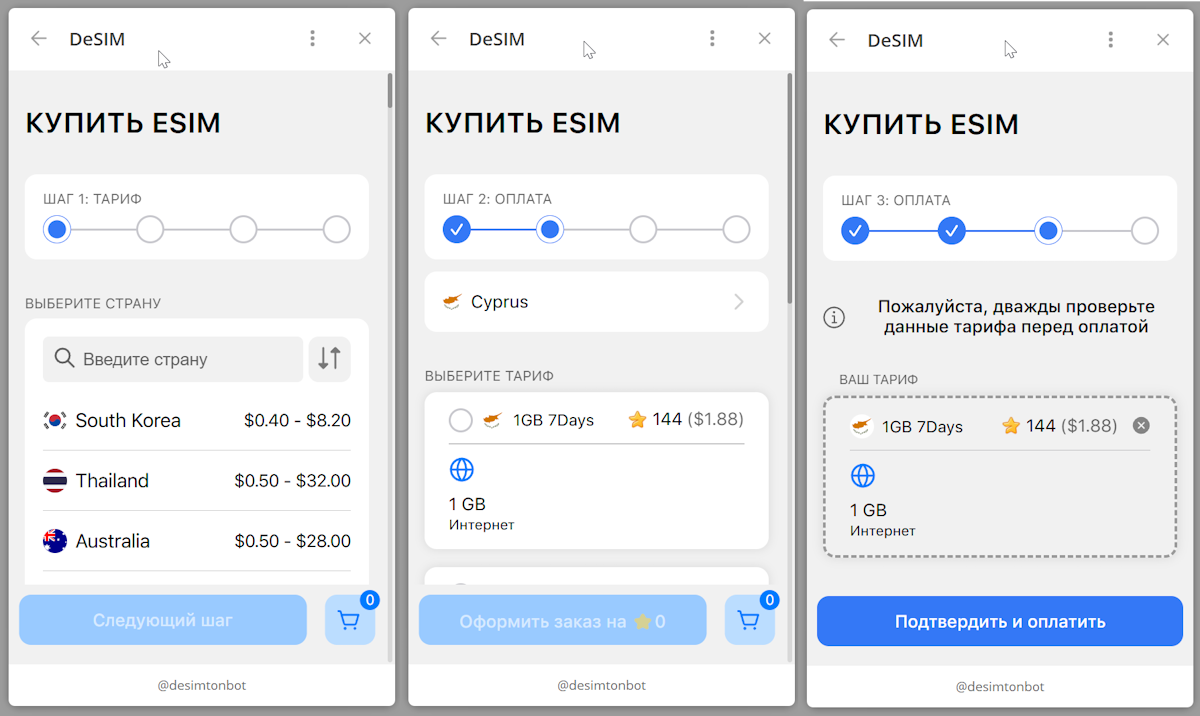
Traveling with the best eSIM for travel eliminates the physical chip’s vulnerability to loss or damage. You never handle a nano-SIM card that can snap, fall out during a swap, or get misplaced in an airport lounge. This removes the need to carry a tiny, fragile component across multiple destinations—a common failure point for conventional SIMs. With an eSIM, your connectivity profile lives in firmware, immune to physical stress or accidental disposal.
Q: What happens if my phone’s SIM tray breaks but I’m abroad?
A: With an eSIM, no tray exists. You cannot break or lose a physical chip, because there is no chip to insert or remove.
Switching networks mid-trip without visiting a store
Switching networks mid-trip without visiting a store is a total game-changer for any traveler. Unlike a physical SIM, your eSIM profile lets you seamlessly swap carriers from your phone’s settings when your connection gets spotty—perfect for hopping between countries. This eliminates the hassle of hunting down a local shop or dealing with language barriers, especially in remote areas. It’s seamless carrier switching for travelers that keeps your data flowing without interruption, saving both time and stress.
Real-World User Reviews and Reliability Scores
When evaluating the best eSIM for travel, prioritize user reviews that consistently cite connection stability during peak hours in major transit hubs. Reliability scores on platforms like Trustpilot often reveal a pattern: providers with top marks for “instant activation” may still show latency spikes in rural zones. A high aggregate score can be misleading if the reviews are dominated by short-haul tourists rather than frequent overlanders. Cross-reference negative feedback specifically about “no service at border crossings” to filter out options that fail in transitional travel corridors. Ignoring this granularity leads to false confidence.
Speed test results from major cities
Real-world speed tests from major travel hubs like London, Paris, Tokyo, and New York reveal that download speeds from top eSIMs can vary dramatically. In dense city centers, Airalo often delivers reliable 4G LTE, hitting 20-40 Mbps, while Holafly’s unlimited plans sometimes throttle to under 10 Mbps during peak hours. Conversely, local-network partners behind Ubigi or Maya Mobile frequently push past 100 Mbps on 5G in Tokyo’s Shinjuku district, making them a strong choice for data-heavy users. Users consistently report that speed drops steeply inside subway stations or crowded landmarks.
Speed test results from major cities confirm that eSIM performance is highly location-dependent, with local partners often outperforming global giants in high-traffic urban zones.
Common complaints: connectivity drops and billing issues
Common complaints in user reviews center on esim connectivity drops and billing errors. Travelers frequently report losing signal after crossing borders, often requiring manual network reselection. Billing issues follow a clear sequence: first, unexpected overage charges appear on the account; second, automated refund requests get no response; third, double billing for the same plan occurs. The typical workflow for users is:
- Data stops working mid-trip without warning
- Support blames device compatibility rather than network partner
- Final bill includes fees not shown during purchase
These patterns directly impact reliability ratings, as dropped connections and unresolved charges make the esim less trustworthy for travel.
Recommendations for long-term travelers vs. weekenders
For long-term travelers, reliability scores heavily favor providers like Airalo or Holafly due to their consistent multi-month data packages and stable network partnerships across regions, avoiding the need for frequent top-ups. Weekend trip users, conversely, prioritize quick activation and competitive short-term rates, often opting for Nomad or eSIM.net for single-country pass flexibility. Long-term explorers should prioritize plans with high data caps and tethering allowances, while weekenders can sacrifice these for cost-effective data for frequent short trips. Reliability feedback for long-term plans often highlights renewal ease, whereas weekenders stress instant setup and coverage density.
Long-term travelers need high-data, multi-month plans with tethering; weekenders need cheap, instant short-term passes.
Future Trends: What’s Next for Travel eSIM Technology
The future of the best eSIM for travel lies in hyper-personalized, always-on connectivity. Soon, your eSIM won’t just activate a local network; it will intelligently auto-select the strongest carrier in real-time, switching mid-call to avoid dropouts at a crowded train station in Tokyo. Multi-network aggregation will become standard, bundling several local providers into one seamless profile so you never hunt for a signal again. Top travel eSIMs will integrate directly with your itinerary, pre-caching maps and ride-share credentials before you land. AI-driven data pools will adjust your plan on the fly, boosting bandwidth for a video call and scaling back when you’re offline exploring. A future eSIM might even learn that you always forget to top up before a safari, automatically extending your high-speed data just as the sun sets over the savannah.
Carrier integration and pre-installed eSIM profiles
Future travel eSIMs will simplify connectivity through direct carrier integration and pre-installed profiles. Instead of scanning QR codes abroad, your phone may arrive with roaming profiles already embedded from key regional carriers, activated instantly upon landing. This removes setup friction and boosts reliability. Seamless, silent switching between pre-loaded carrier profiles ensures you always latch onto the strongest local signal. For travelers, this means zero time wasted troubleshooting—just turn on your device and connect.
- Pre-installed profiles eliminate the need to download or scan eSIMs mid-trip.
- Carrier integration auto-selects the optimal profile for price and coverage in each country.
- Redundancy via multiple pre-loaded carriers prevents single-network failures.
Blockchain-based roaming and decentralized connectivity
Blockchain-based roaming eliminates centralized carrier gateways, enabling direct peer-to-peer connectivity between a traveler’s device and local network nodes. This decentralized connectivity allows eSIMs to establish secure, real-time data sessions without legacy roaming agreements or intermediaries, slashing latency and per-megabyte costs. Users gain trustless network access, as blockchain smart contracts automate authentication and billing, ensuring transparent usage logging without a third party. For travel eSIMs, this means a traveler can seamlessly switch between global providers with instant, cryptographically verified payments, bypassing throttling or regional blackouts. Roaming becomes a fluid, permissionless transaction, not a carrier-controlled service.
Potential global data bundles from major telecoms
Major telecoms are moving toward unified global data bundles that replace country-specific plans with a single, high-speed allowance valid across dozens of nations. For travel eSIM users, this means one purchase covers roaming in, for example, the EU, Asia-Pacific, and the Americas under a single data cap, with automatic network switching between partner carriers. These bundled pools typically offer 5G speeds and daily 500MB–1GB throttle limits, unlike fragmented regional options. A single plan avoids manual re-provisioning across borders.
| Bundle Type | Coverage Scope | Throttle After Cap |
|---|---|---|
| Global 10GB | 60+ countries | 128 kbps |
| Regional Unlimited | 30 European countries | 2G speeds |
| Multi-Continent Max | 80 countries | 256 kbps |